Live Tick-Free with Pointe!
Pointe Pest Control St. Louis is committed to keeping your home pest-free in every season. Our team of experienced and state-certified technicians are dedicated to providing safe and effective pest control services for the Western Illinois and Eastern Missouri areas. If a pest problem is not completely resolved after a visit, our technicians will return until it is eliminated.
All About Ticks
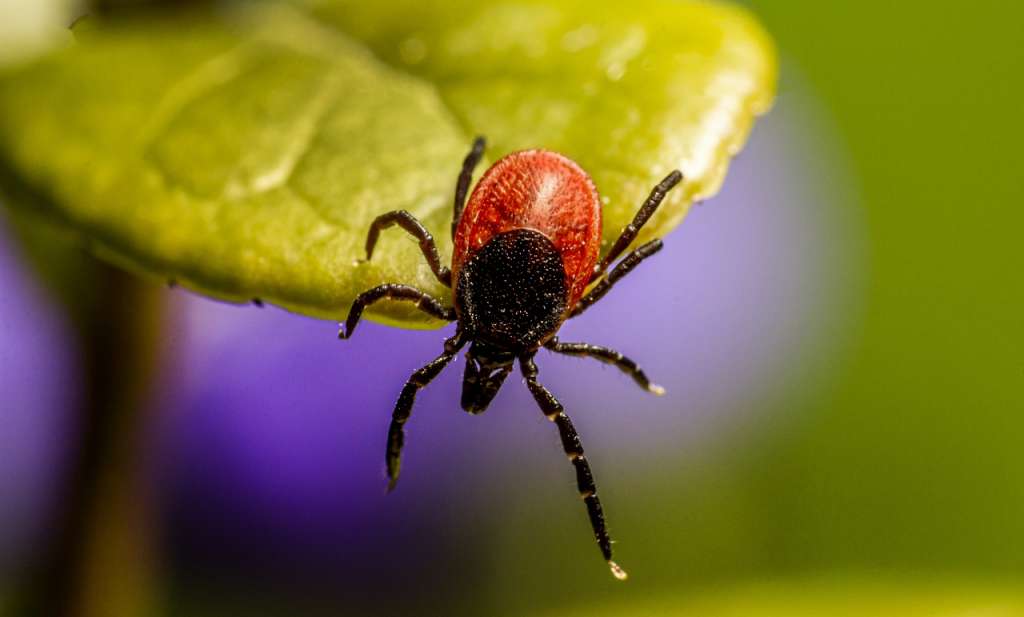
Ticks are classified as arachnids, not insects, and they certainly have the characteristics to prove it. They have hard exoskeletons, simple eyes, and no jaws. The bodies of ticks are one section instead of the normal two in other arachnids, like spiders.
Since ticks do not have wings or the muscles to jump, they need to crawl onto mammals to use them as hosts. Ticks live in tall grass and plants, so they can just hide in the thick parts of the greenery until they are hungry again. The tick will then wait at the top of a branch, leaf, weed, or blade of grass for someone to walk just close enough by the tick. It can then grab onto the person with its sticky front legs and hold on until it can crawl to exposed skin and latch on in order to start drinking blood. They can also grab onto a dog’s fur or hair, especially if the dog ventures into some thick brush or tall grass.
Unfortunately, ticks do not just suck our blood and leave it at that. They can transmit dangerous diseases through their bites, like mosquitos can, and may cause lasting health issues in the person who was bitten by a tick.
Ticks in Missouri
Out of multiple tick species that are prevalent in the U.S., there are three that are most common in Missouri.
1.) Lone Star Tick – Amblyomma americanum
Despite the name, this tick does not only exist in Texas. It is also quite common in Missouri and other eastern states. Lone star ticks are reddish-brown in color, but turn gray once full of blood. It is easy to differentiate between males and females because only females have the famous white star-shaped dot. The females are also larger than males, and can get up to 1/2 of an inch in size. Lone Star ticks will feed on blood through all 3 life stages, which contributes to their abundance in southeastern and northeastern states. Although these ticks do not transmit Lyme disease, their bites can cause a rash accompanied by flu-like symptoms. This condition is also called southern tick-associated rash illness, or STARI.
2.) Brown Dog Tick – Rhipicephalus sanguineus
These ticks will only bite humans when they are desperate since they prefer to feed on domestic dogs. They can be found in all U.S. regions, favoring warm climates, which explains why we primarily see them in the spring and summer. Brown dog ticks are reddish-brown normally, then turn bluish-gray after feeding. They are only about 1/8 inches un-engorged and 1/2 inches engorged. It is difficult to spot a brown dog tick until it is actually on a dog or a person, but when they are not on a host, this tick can live completely indoors if it has the opportunity to invade by hitchhiking on its host.
3.) American Dog Tick – Dermacentor variabilis
This tick likes to feed from dogs, but it can still suck our blood and transmit harmful diseases. American dog ticks have hard exteriors that are generally brown with white-gray details, the female’s being more moon-shaped than the random splotches of the males. The adults have 8 legs that allow them to crawl to a more secure spot on their host and remain unseen. They are commonly found in gardens and the edge of secure wooded areas with greenery all around, as this is the prime spot for the females to lay their eggs.
The Risks of Ticks
Different tick species can transmit various diseases, but the common method of infection across all of them is the tick biting an infected mammal, then injecting those pathogens into the next host. Some of the most common tick-borne illnesses are Rocky Mountain Spotted Fever, Lyme disease, anaplasmosis, babesiosis, and Southern Tick-Associated Rash Illness. After being bitten by an infected tick, the common disease symptoms include a rash, fever, muscle aches, and chills. It is crucial that the infected person seeks medical attention as soon as the symptoms appear. If these diseases are not treated immediately, it can lead to lasting health issues that require immediate medical attention, such as arthritis, facial palsy, and heart issues.
Pets and Ticks
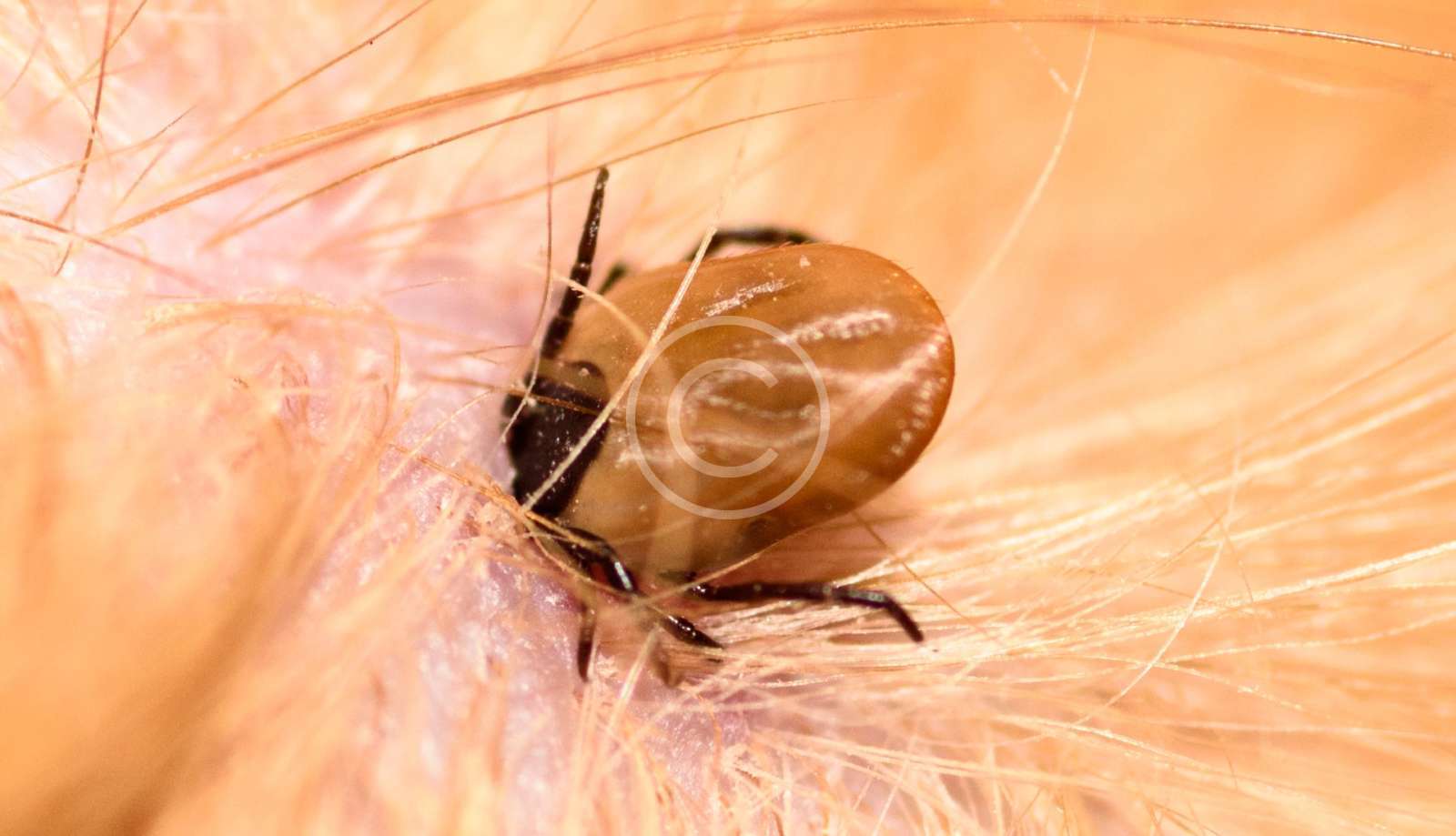
Besides humans, domestic dogs are another common host of ticks. Dogs can contract ticks in two main ways. One is if the canine goes into thick brush or tall grass, a sneaky tick can crawl from the plants directly onto the dog, a process called questing. The second way is if the dog unknowingly lies down on the lawn near a tick, where it can then crawl over and hide in the thicker parts of the fur or hair. Dogs can also contract diseases from infected ticks, including Lyme disease. They are most likely to get it from deer ticks, which are common in the eastern and Midwestern states. In dogs, Lyme disease becomes apparent when the dog is limping, stops eating, and has a fever. The Lyme disease can go straight to the animal’s kidneys if left untreated, and paired with flu-like symptoms, is a sign that it may be too late. If you find a tick on your furry friend, carefully remove it using tweezers and be sure not to leave the head attached. Watch your dog for any symptoms, and take them to the vet at the first signs of health issues.
Tick Prevention
Over the past several years, the average number of people affected by tick-borne diseases has averaged about 50,000 over the past several years. It is important to take precautions against ticks to ensure that you do not become part of that statistic.
The best way to make sure you and your family stay tick-free is to thoroughly check one another after extensive time in a wooded or overgrown area. Inspect any exposed skin, folds of clothing, shoes, bags, and hair for small ticks. If your dog was also in this area, check their fur with your hands for any hitchhiking ticks. It is much better to find a tick and remove it during this check, than to accidentally bring it home and unknowingly give it plenty of hiding spots in between feedings.
A good can of tick repellant is your best friend when engaging in outdoor activities, like hiking and fishing. Spray exposed skin, excluding the face, before going into nature and stay out of overgrown greenery as much as possible.
Stop Ticks With Pointe St. Louis!
The most reliable way to be positive that your yard is tick-free is with scheduled pest control services. We treat for multiple blood-sucking pests, including ticks, fleas, and mosquitos. Our technicians will inspect the area for any signs of these disease-carrying pests, then apply our EPA-approved treatments to eliminate the problems. Contact us to learn how our services will keep you free of bloodthirsty pests.